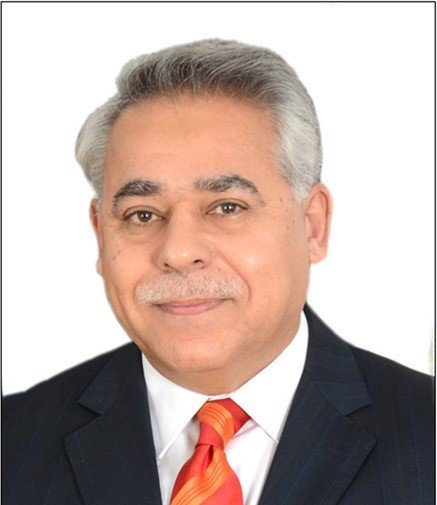
 Dr. Issam Al-Barram
Since the emergence of the modern state, the ethical question has shadowed politics as closely as a shadow follows the body. Can politics, the art of managing interests and balancing power, be practiced based on fixed principles? Or does the world of international relations, with its competition and conflicts, impose its own logic that makes ethics a luxury reality cannot afford? This question is increasingly relevant today amid successive international crises, open wars, and shifts in the balance of power, making the discussion of “moral diplomacy” seem idealistic to some and an urgent necessity to others.
Traditionally, diplomacy is defined as a tool for states to achieve their interests through peaceful means. Yet, interests are not an abstract concept; they stem from a specific vision of self and the world. When a state defines its interest solely in terms of narrow security or immediate economic gain, the ethical dimension shrinks. But when regional stability, respect for international law, and human rights are included in calculations, the concept of interest broadens to incorporate a moral dimension. It is here that the discussion of moral diplomacy begins.
The tension between ethics and politics is not new. Classical political thought long divided between those who saw politics as a domain independent of ethics, governed by the necessities of power and survival, and those who believed that the absence of an ethical dimension turns politics into a practice devoid of legitimacy. In practice, we rarely find a pure model of either approach. States speak the language of principles, yet negotiate in the language of interests, often attempting to reconcile the two in a delicate balance.
Moral diplomacy does not mean denying interests or ignoring power dynamics. It means setting limits on what is acceptable or unacceptable in pursuit of those interests. It acknowledges that means cannot be completely separated from ends, and that the manner in which international relations are conducted leaves a profound impact on a state’s image and credibility. A state that adopts an ethical discourse but acts contrary to it gradually loses the trust of both partners and adversaries. Conversely, when there is consistency between word and action, it becomes a moral asset that strengthens long-term influence.
However, the international reality presents complex challenges to this aspiration. In times of crisis, a state may face two bitter choices: either adhere to a principle and bear a significant strategic or economic cost, or partially compromise to avoid a greater loss. At such moments, the question sharpens: are ethics absolute or relative? Can the same standards be applied universally, or does each situation require a specific approach?
Some argue that discussions of moral diplomacy sometimes conceal selective use of principles. States may champion human rights in one context, then remain silent in another when such issues conflict with vital interests. This selectivity weakens the credibility of ethical discourse, exposing it to accusations of being a political tool rather than a genuine moral commitment. The real challenge, therefore, lies not only in adopting an ethical discourse but in applying it in a balanced and as non-selective a manner as possible.
Nonetheless, values have undeniably played a pivotal role in the development of the modern international system. The idea of international law, the principle of state sovereignty, and the prohibition of force are all concepts with a moral dimension before being legal. Even the establishment of international organizations stemmed from the belief that cooperation and understanding are more humane and less costly than perpetual conflict. These developments indicate that ethics is not entirely alien to politics; it has always been part of humanity’s effort to organize its relations in a less violent way.
Moral diplomacy may manifest in supporting peaceful solutions to conflicts, mediating between warring parties, and providing humanitarian aid free from narrow calculations. It may also appear in refraining from exploiting another state’s weakness for immediate gain. While such actions may not yield rapid results, they build long-term reputation and establish more stable relationships. In a connected world, military power alone no longer guarantees influence; reputation and credibility are now integral components of soft power.
Domestic public opinion also plays an increasingly important role in pushing states toward positions more consistent with declared values. Societies today are better informed about global events and more capable of holding governments accountable for their foreign policies. This pressure creates space for moral diplomacy, as decision-makers recognize that stark contradictions between principles and actions can have negative repercussions at home before abroad.
It is important to acknowledge, however, that politics will remain a field of difficult choices. There is no diplomacy without negotiation, and no negotiation without compromise. The question is not whether politics can be absolutely ethical, but to what extent the gap between principle and interest can be narrowed. Moral diplomacy is not a perfect formula; it is a gradual path aimed at integrating humanitarian considerations into strategic calculations.
Ultimately, politics divorced entirely from ethics becomes shortsighted practice, potentially achieving quick gains but sowing seeds of future crises. Politics that ignores reality in the name of idealism may find itself incapable of protecting the interests of its people. Between these extremes moves the concept of moral diplomacy, as an attempt to reconcile realism with values, necessity with conscience.
Can politics be practiced on principles? Perhaps not in the absolute sense that ignores complexity, but it can certainly be conducted with a minimum of ethical commitment that prevents sliding into raw power logic. In a world of increasing transboundary crises—from conflicts to climate change—cooperation based on trust is more urgent than ever. Such trust is built not by power alone, but through credible positions consistent with declared values. Here lies the possibility of moral diplomacy—not as a distant dream, but as a difficult yet essential choice in the course of international politics.